
Morale, Promises, and Trust in Wall World Strategy
Wall World Strategy morale, housing, riots, and promise deadlines—what Steam and public footage show about trust, homelessness, and colony stability.
FAQ
What lowers morale according to first-party text?
What is a promise in gameplay?
Does homelessness affect morale?
What do trust and promise achievements require?
Society management is not cosmetic in Wall World Strategy. The Steam store page states that overpopulation, food shortages, and supply disruptions can crash efficiency, spiral into crisis, and trigger riots. The UI also tracks morale, while Steam achievements name promises and trust.
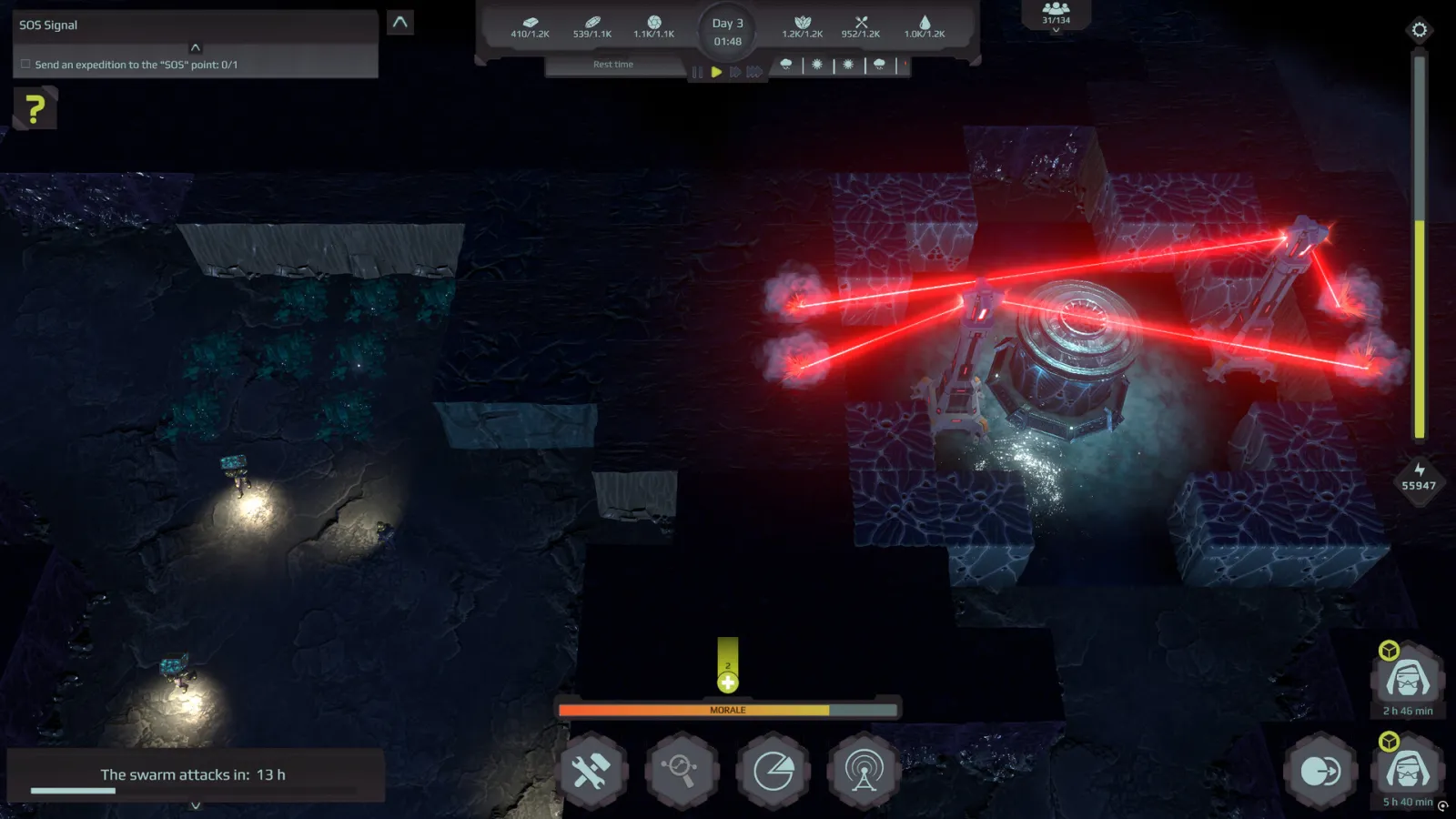 Official Steam screenshot: population, morale, and housing panels beside surface structures.
What does morale measure?
In campaign footage we checked, morale appears as a colony-wide meter that reacts to living conditions, shortages, and leadership decisions. Tutorial messaging mentions discontent when housing and life support fail to keep up with newly awakened citizens, which matches the store’s riot warning.
The same footage ties morale movement to actions you can see on screen:
- Housing homeless residents in Barracks or modular housing lines
- Feeding people through the Canteen and water logistics tied to the Rain Collector chain
- Responding to promise requests on time
Those systems overlap with the beginner guide and workers and jobs page: beds, food production, and whether buildings stay staffed.
How do housing and homelessness tie in?
Official Steam screenshots show a Housing panel with capacity readouts while modular apartments cling to the Wall. In the footage we checked, narration states that homeless colonists lower morale and push the colony toward unrest.
Events such as Core life support malfunction can wake additional cryosleep residents without instantly providing beds (seen in campaign playthroughs we checked). That spike can hit morale and promise timers at the same time.
The Steam achievement Human Anthill requires housing everyone exclusively in Human Anthill modules, which confirms alternate housing types exist beyond starter Barracks.
The achievement For a Rainy Day asks for 300 units of water and 250 food rations at the same time—numbers taken from Steam’s achievement text, not from in-game tooltips on this page.
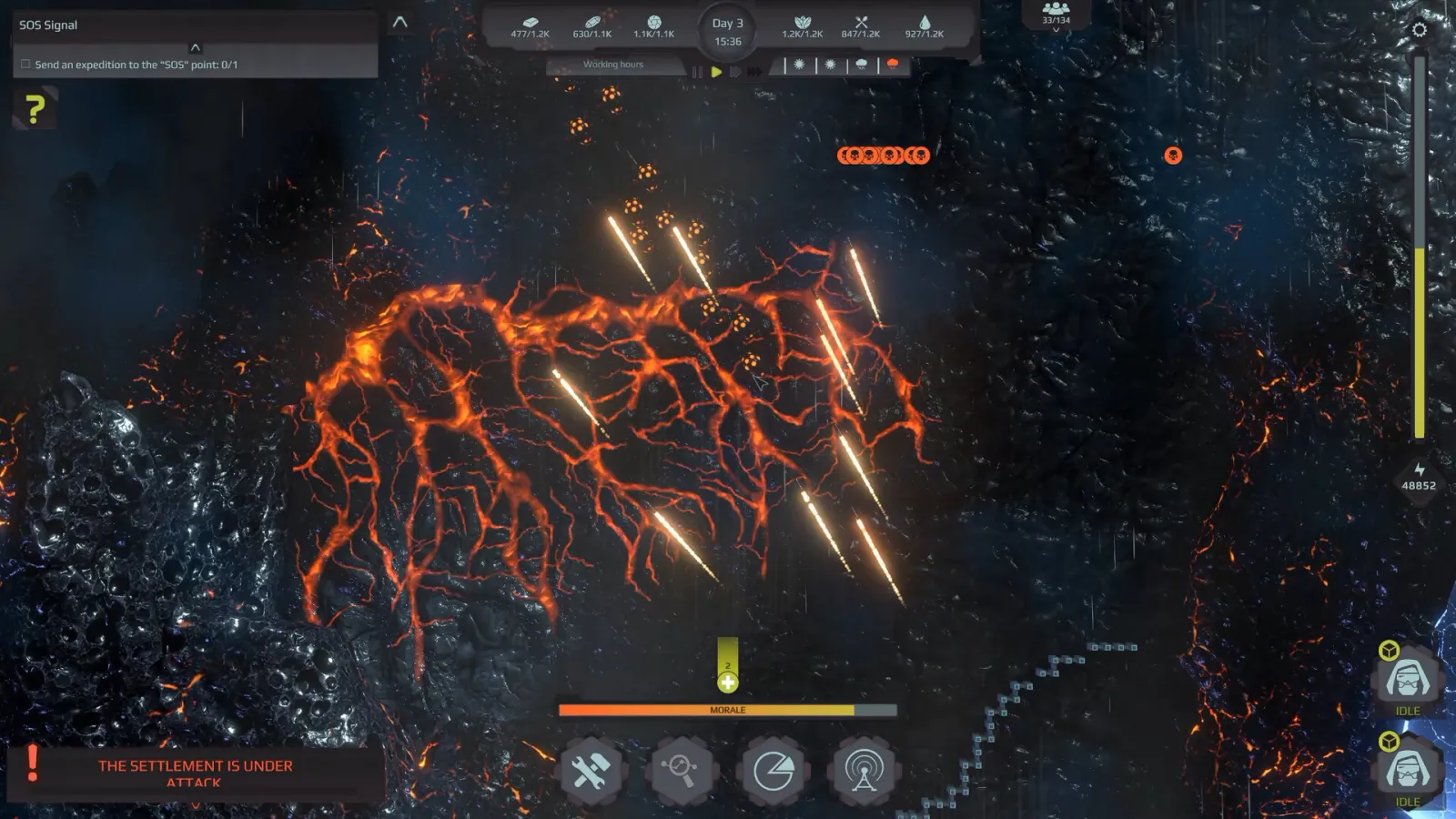 Official Steam screenshot: modular housing stacks and a Housing panel.
What are promises and what happens if you break them?
Promises are timed commitments to residents. In the campaign footage we checked:
- Residents request a goal (for example housing for everyone currently awake).
- You accept or decline the promise.
- If you accept, a deadline counts down while you build Barracks or other housing.
- Fulfilling the promise triggers positive morale feedback on screen.
- Missing the deadline drops morale; the same footage links low morale to unrest risk.
Steam’s achievement A Promise Is a Promise requires you to never break a promise across an entire playthrough. That is an optional achievement constraint, not a story gate.
We do not have a first-party list of every promise template. In the footage we checked, promises appear when shortages (housing, food, power) are visible in the UI.
How does trust differ from morale?
Steam achievements reference trust separately from day-to-day morale messaging:
| Achievement | Official requirement (Steam) |
|---|---|
| A Promise Is a Promise | Never break a promise during a playthrough |
| The People Are With You | Restore residents’ trust after it falls to 10% |
Campaign footage emphasizes morale and discontent text more often than a labeled trust bar. We could not verify whether trust and morale share one UI widget or two.
Until a clear trust meter screenshot is available, achievements remain the strongest first-party proof that trust can fall to 10% and be recovered.
What are riots and when do they show up?
On Steam, riots are a stated consequence when society metrics collapse (overpopulation, food shortages, supply disruptions). Campaign commentary we checked discusses rebellions alongside morale-dependent choices. We do not have frame-accurate footage of an on-screen event literally titled “riot” in English UI text—treat riots as the store’s label for society breakdown, not a random encounter type we verified in isolation.
Damaged infrastructure can still reduce usable jobs: wounded workers cannot fill slots while untreated, and siege damage without repairs can worsen shortages. See power and electricity for brownouts and defending waves for post-wave repair pressure.
What we have not verified yet
- Exact UI relationship between trust and morale meters in the footage we checked.
- A frame-accurate riot sequence with English UI labeling.
- A complete catalog of promise types beyond housing and life-support examples in one campaign playthrough.
- Whether every morale feedback line uses the same numeric format across events.
Sources and verification
- Wall World Strategy on Steam — society and riot language.
- Steam achievements for app 4218360 — A Promise Is a Promise, The People Are With You, Human Anthill, For a Rainy Day.
- Day One Update — Supplies Stolen fix (2026-11-12).
- Gameplay: Campaign commentary — M6UALL1eE24 promises and morale feedback; vnd51JZVmz4 — campaign playthrough morale and homelessness context.
Last checked against Steam data and public gameplay footage on 2026-11-13.
Related Articles
achievements
Wall World Strategy Achievements List: All 46 with Rates
Full list of Wall World Strategy achievements with official Steam descriptions, global unlock rates as of 2026-11-13, and links to related guides.
achievements
Wall World Strategy Hidden Achievements (Spoilers)
All 12 hidden Wall World Strategy achievements with official Steam descriptions, global unlock rates, and spoiler-safe folding for story and Leviathan trophies.
buildings
Rain Collector in Wall World Strategy: Water During Storms
What the Rain Collector does in Wall World Strategy: rain water, the weather UI, Bread and Water and For a Rainy Day achievements, and condenser research.
Was this helpful?
Thanks for the feedback!